.svg)
.svg)
.svg)
.svg)

Borderline PD & Addiction Treatment
Individualized, evidence-based care in a private Hollywood Hills setting. Same clinical team from intake through aftercare.

The Connection Between Borderline Personality Disorder and Addiction
Borderline Personality Disorder and substance use disorders are among the most commonly co-occurring conditions in clinical practice. Each condition tends to worsen the other — substances are frequently used to manage BPD symptoms, while sustained substance use worsens the underlying condition and makes recovery harder. BPD also commonly co-occurs with PTSD and depression — conditions with overlapping emotional dysregulation and trauma histories that significantly complicate both diagnosis and treatment.
Treating only the addiction without addressing BPD leaves the most powerful driver of substance use unaddressed. This is why integrated dual diagnosis treatment — treating both conditions simultaneously within a unified clinical plan — produces significantly better outcomes than treating either in isolation.
Symptoms and Presentation
Borderline Personality Disorder presents alongside addiction in ways that can make diagnosis and treatment more complex. Substance use can mimic, mask, or worsen BPD symptoms. A comprehensive clinical assessment — conducted after a sufficient period of stabilization — is essential for accurate diagnosis and appropriate treatment planning.
DBT — Dialectical Behavior Therapy — was developed specifically for BPD. It is the most evidence-supported treatment and is highly effective in dual diagnosis contexts.
Start your recovery
Our admissions team is available around the clock — confidentially, and without pressure.
How We Treat BPD and Addiction
DBT Skills Training
Core modules in mindfulness, distress tolerance, emotion regulation, and interpersonal effectiveness — taught in individual and group formats.
Crisis Stabilization
24/7 clinical availability with structured safety planning that addresses both self-harm and substance use as coping mechanisms.
Relationship Repair
Interpersonal therapy that rebuilds trust and communication skills, replacing the chaotic relationships that often fuel both conditions.
"DBT gives you the skills to sit with discomfort without reaching for substances. That's the foundation of lasting change."
Addictions We Treat Alongside This
Four Pillars of Borderline PD and Addiction Care

DBT Skills Training
Core DBT modules in mindfulness, distress tolerance, emotion regulation, and interpersonal effectiveness are taught in individual and group formats. DBT was developed specifically for BPD and is the most evidence-supported treatment in dual diagnosis contexts.
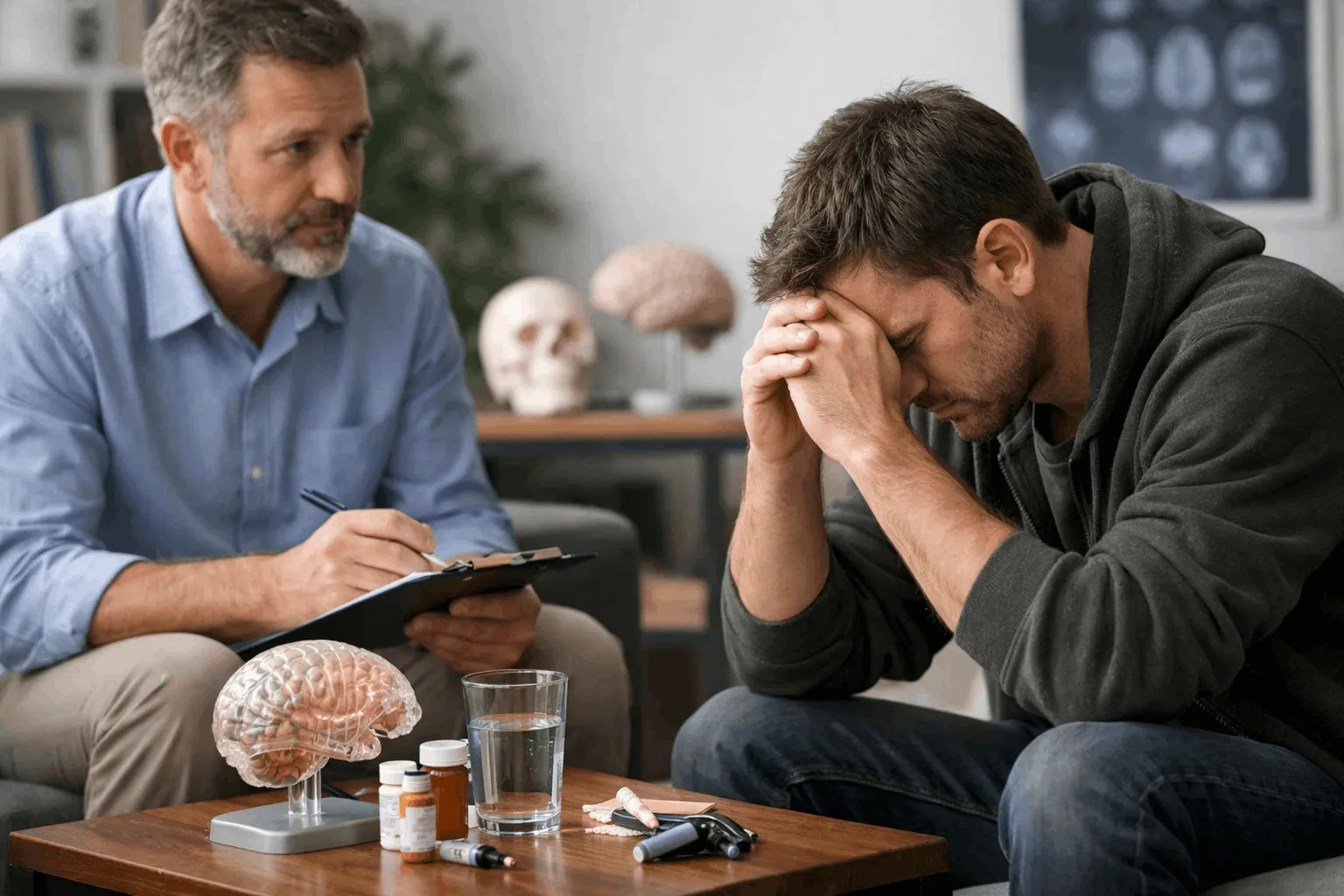
Crisis Stabilization
24/7 clinical availability with structured safety planning addresses both self-harm and substance use as coping mechanisms. Our team is trained to de-escalate acute crises while maintaining a therapeutic relationship.

Integrated Dual Diagnosis Care
BPD and addiction are inseparable in clinical practice. Our unified plan treats emotional dysregulation and substance use simultaneously — because treating one without the other almost always leads to relapse.

Aftercare and Long-Term Support
Recovery extends beyond discharge. Our step-down PHP/IOP programming and alumni community keep clients connected, accountable, and supported during the months and years that follow residential treatment.

Start Your Recovery from Borderline PD and Addiction Today
You don't have to face borderline personality disorder and addiction alone. Our team of compassionate clinicians is available around the clock — confidentially, and without pressure — to guide you toward lasting recovery.
FAQ about Borderline Personality Disorder and Addiction
How is BPD diagnosed?
BPD is diagnosed through clinical assessment of persistent patterns across multiple domains. Because substance use can mimic BPD features, accurate diagnosis often requires assessment after sobriety.
Is DBT available at Bliss Recovery?
Yes. DBT is a core component of our clinical program and is available in both individual therapy and group skills training formats.
Why does borderline personality disorder frequently co-occur with substance use?
People with BPD often experience intense emotional dysregulation, fear of abandonment, and chronic feelings of emptiness — all of which can lead to substance use as a rapid, accessible form of relief. Impulsivity, a core BPD feature, also increases the likelihood of engaging in risky substance use. The result is a reinforcing cycle: substance use temporarily numbs emotional pain, while also destabilizing mood, relationships, and self-image — all of which are already vulnerable in BPD.
Does insurance cover borderline personality disorder and addiction treatment at Bliss Recovery?
Yes. We're in-network with HealthSmart, MultiPlan, PMCS, and TriWest, and most major commercial PPO plans cover integrated dual-diagnosis treatment for BPD and co-occurring substance use disorder under the Mental Health Parity and Addiction Equity Act. Coverage depends on your specific plan and level of care. Our admissions team verifies your benefits in detail before you commit to anything.
How long does integrated treatment for BPD and addiction take?
Most clients begin with medically supervised detox (5 to 10 days), followed by residential treatment of an individualized length. DBT — the gold-standard therapeutic approach for BPD — requires consistent practice over time; longer residential stays tend to produce more durable skill acquisition. PHP and IOP step-down programming typically add another 4 to 12 weeks of ongoing DBT skills and individual therapy.
What does BPD and addiction treatment look like at Bliss Recovery?
Treatment begins with a thorough psychiatric assessment — often conducted after initial sobriety, since substance use can mimic BPD features. Our clinical team builds a unified plan addressing both conditions simultaneously. DBT is the primary evidence-based approach: individual therapy focuses on skill building and behavior chain analysis, while group sessions reinforce distress tolerance, emotional regulation, mindfulness, and interpersonal effectiveness.
Is residential treatment the right level of care for BPD and addiction?
For clients managing active BPD symptoms alongside substance use, residential treatment provides the stable, consistent environment that DBT requires to take hold — daily structure, ongoing therapeutic contact, and removal from relationship dynamics that trigger emotional crises and substance use. PHP and IOP are appropriate next steps after residential stabilization, maintaining DBT skills work and clinical momentum.
Related Conditions & Programs
Mental health and addiction treated together.
Co-occurring disorders reinforce each other. We treat both simultaneously — with psychiatric support, therapy, and medication management.