.svg)
.svg)
.svg)
.svg)
Reach Out & Verify
Call us to discuss your situation and confidentially verify your insurance coverage without commitment.
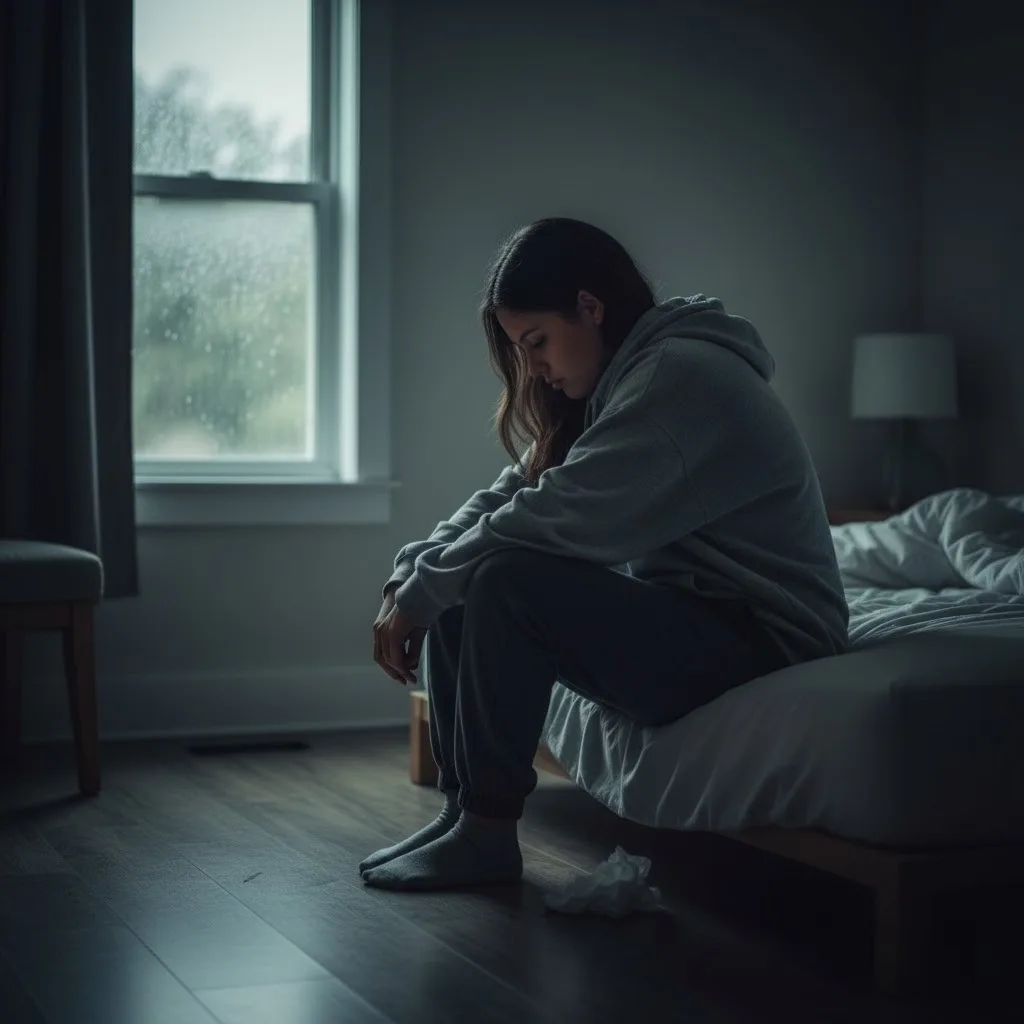
Depression and addiction treatment addresses both conditions at the same time, in one clinical plan, because each tends to make the other worse. Here at Bliss Recovery, our psychiatric and clinical teams deliver that care across detox, residential, PHP, and IOP at two private Hollywood Hills residences, and depression is one of eight co-occurring disorders we treat.
At a glance

Depression and substance use disorders are among the most commonly co-occurring conditions in clinical practice. Each condition tends to worsen the other — substances are frequently used to manage depression symptoms, while sustained substance use worsens the underlying condition and makes recovery harder. Depression also frequently co-occurs alongside anxiety disorders and PTSD, which can compound the severity of mood symptoms and significantly raise the risk of relapse.
Treating only the addiction leaves the most powerful driver of substance use unaddressed. That is why we treat both conditions at the same time within one clinical plan, with most clients starting in our residential program, where mood can be monitored every day.
Sources: SAMHSA, 2024 National Survey on Drug Use and Health; Alcohol Research: Current Reviews, 2019.
Depression is not one condition, and the presentation changes what treatment should do.
Mood symptoms that cycle with periods of elevated energy point toward a different diagnosis and a different medication approach. That is covered on our page for bipolar disorder and addiction.

Self-medication rarely announces itself. It tends to look like a routine that made sense at the time.
If several of these are familiar, the substance use is likely a symptom as much as a cause, and treating it alone is unlikely to hold.
Mood almost always gets worse before it gets better, and knowing that in advance makes it survivable. What the first weeks look like depends heavily on the substance.
Anhedonia deserves its own mention. Many people expect sobriety to feel like relief and instead find nothing feels good yet. The brain's reward system needs time to recalibrate. That flatness is a stage, not a verdict on recovery, and it is a common reason people return to use in month two.
Medically supervised detox is where this phase gets monitored rather than endured alone.
If you are in crisis right now. Depression and substance use together can raise the risk of suicidal thoughts, and we screen for it throughout treatment. If you or someone you love is in crisis, call or text 988 to reach the Suicide and Crisis Lifeline, or call 911 in an emergency.
Comprehensive assessment of mood history, substance use patterns, and medication response to distinguish primary from substance-induced depression.
Antidepressant selection coordinated with addiction recovery — avoiding medications with abuse potential while targeting mood stabilization.
Structured therapy that rebuilds rewarding activities and social connection, countering the withdrawal and isolation that fuel both conditions.
"When we treat the depression alongside the addiction, we address what is driving the substance use, not just the symptom."
Depression rarely travels alone. The substances most often used to manage it, and the conditions that most often sit alongside it, are treated here under the same clinical plan. Select any condition below to see how we approach it.
Depression changes the pace of treatment, so the continuum matters more here than it does for substance use alone. Clients move down as they stabilize rather than on a fixed schedule.
Our admissions team is available around the clock, confidentially and without pressure.
Call us to discuss your situation and confidentially verify your insurance coverage without commitment.
Complete a comprehensive assessment covering your mood history, substance use, and current symptoms.
Begin detox or early residential care focusing on physical stabilization with daily mood monitoring.
Therapy, psychiatric care, and group work start together rather than in sequence for dual healing.
At roughly four weeks, with substances cleared, the depression diagnosis is revisited and your plan adjusted.
PHP/IOP programming and a long-term aftercare plan are built before discharge, not after.
Our guide to your first 72 hours covers the arrival period in more detail.
A thorough assessment of mood history, substance use patterns, and medication response allows us to distinguish primary from substance-induced depression. Antidepressant selection is coordinated with recovery goals — avoiding medications with abuse potential while targeting mood stabilization.

CBT and behavioral activation rebuild rewarding activities and social connection — countering the withdrawal and isolation that fuel both depression and substance use. Individual and group sessions run in parallel throughout treatment.

Treating only the addiction without addressing depression leaves the most powerful driver of relapse unresolved. Our unified clinical plan targets both conditions at the same time, so neither is left to undermine the other.

Recovery extends beyond discharge. Our step-down PHP/IOP programming and alumni community keep clients connected, accountable, and supported during the months and years that follow residential treatment.

Bliss Recovery is in network with HealthSmart, MultiPlan, PMCS, and TriWest. Most major PPO plans are accepted out of network, and private pay is welcomed. We are not in network with HMO plans or Medi-Cal.
Federal parity law requires health plans that cover mental health and substance use treatment to apply comparable terms to those benefits and to medical care. It does not require every plan to include that coverage, and benefits vary by plan and level of care. Our admissions team will verify your insurance benefits with you, at no cost, before you commit to anything.
Our admissions team can review your benefits and explain your options before you commit to treatment.

You don't have to face depression and addiction alone. Our team of compassionate clinicians is available around the clock, confidentially and without pressure, to help you take the next step.
Some depressive symptoms ease in the first weeks after substances clear, especially when intoxication or withdrawal was driving them. Others persist because the depression came first. We monitor mood from day one and revisit the diagnosis at roughly four weeks, so your plan reflects what remains rather than what withdrawal caused.
Yes. Our psychiatric and clinical teams work from one treatment plan, so depression care begins alongside detox or residential care rather than after it. The National Institute on Drug Abuse notes that treating co-occurring conditions together, rather than separately, can make treatment more effective for both.
It depends on your symptoms, your safety, and how much structure you need right now. Many clients with depression and addiction begin in our residential program, where mood is monitored daily, then step down to PHP and IOP. After an assessment, our admissions team will talk through which level of care fits.
Not everyone does. Our psychiatric team reviews your mood history and substance use before recommending anything. When an antidepressant makes sense, we choose it to fit your recovery and avoid medications with misuse potential. Medication is one part of a plan that always includes therapy.
We are in network with HealthSmart, MultiPlan, PMCS, and TriWest, and we work with most major PPO plans out of network. Coverage varies by plan and level of care, so our admissions team will verify your insurance benefits at no cost before you commit. We are not in network with HMO plans or Medi-Cal.
There is no fixed timeline. Detox typically runs five to ten days, and residential care often lasts 30 to 90 days, followed by PHP, IOP, and aftercare as you stabilize. Because depression can change the pace of recovery, we base length of stay on clinical progress rather than a set schedule.
Co-occurring disorders reinforce each other. We treat both simultaneously — with psychiatric support, therapy, and medication management.