Medical Detox · Hollywood Hills24/7 Clinical oversight
ProgramsLevels of care · therapy · specialty
Medical Detox Program in Los Angeles
Physician-led medical detox in the Hollywood Hills, and the first of five steps in one place: detox, residential, partial hospitalization, intensive outpatient, and alumni. The same care team stays with you from the first 72 hours through the year that follows.
Timeline varies by substance and individual physiology.
0
Medical Director per client
A named physician — not a rotation — oversees your detox.
0
% transition to residential
Detox is step one. Residential treatment follows.
Supervision24/7 medical
Duration5–10 days typical
MedicationsProtocol-based, individualized
SettingHollywood Hills private estate
InsuranceMost PPO plans accepted
Bliss Recovery, LA
Medical Detox at Bliss Recovery
Withdrawal from alcohol, opioids, and benzodiazepines is medically serious. Some withdrawal syndromes — alcohol and benzo in particular — can be life-threatening without clinical management. Detox at Bliss Recovery is physician-directed, 24/7, and structured to be as safe and comfortable as the clinical situation allows. This level of care can support people seeking treatment for fentanyl addiction, heroin addiction, benzodiazepine addiction, and opiate addiction. You can verify your insurance before admission to understand your specific coverage.
Detox is step 1 of 5 in the continuum of care. It addresses physical dependence — not the psychological and behavioral dimensions of addiction. Residential treatment follows immediately after detox. Learn about residential treatment →
Medical oversight
What Is Medical Detox?
Medical detox is the supervised process of safely removing substances from the body while managing withdrawal symptoms. It is not treatment for addiction — it is the clinical prerequisite that makes treatment possible. Without it, the physical demands of withdrawal prevent meaningful engagement with therapy.
At Bliss Recovery, detox is physician-directed. A Medical Director is assigned to each client and oversees the detox protocol from start to finish — including medication selection, dose adjustments, and the transition plan into residential care.
Why supervision matters
Why Is Withdrawal Dangerous Without Medical Oversight?
Alcohol and benzodiazepine withdrawal can cause seizures that are fatal without medical intervention. Opioid withdrawal is rarely fatal in otherwise healthy adults — but the severity of symptoms makes unsupervised withdrawal a primary driver of relapse and overdose in the first 72 hours after stopping use.
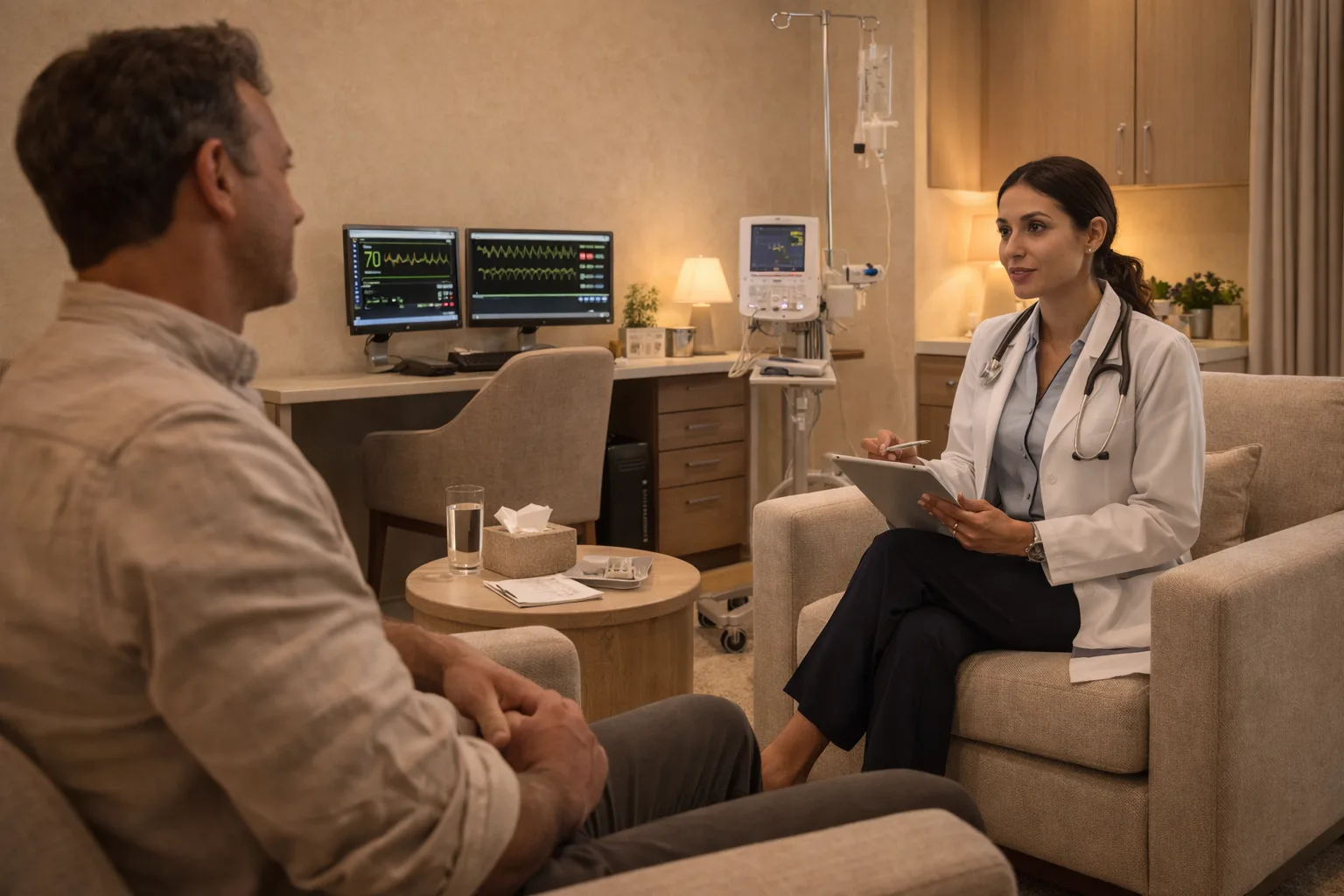
Medical supervision means a physician reviews your status regularly, medications are adjusted based on objective clinical data, and a nurse is available around the clock. If something changes, the clinical team responds immediately.
Protocol by substance
How Does Withdrawal Differ by Substance?
Alcohol & benzodiazepines — The most medically serious. Seizures and delirium tremens (DTs) are possible within 24–72 hours of last use. Detox typically takes 5–10 days and requires close medical monitoring throughout, including vital sign tracking and medication management with benzodiazepines or phenobarbital.
Opioids — Intensely uncomfortable but rarely dangerous in otherwise healthy adults. Symptoms peak at 48–72 hours and include nausea, muscle pain, insomnia, and anxiety. Medication-assisted protocols using buprenorphine significantly reduce discomfort. Typical duration: 7–14 days.
Stimulants — No defined physical withdrawal syndrome, but significant psychological symptoms including fatigue, depression, and cravings. Medical support focuses on sleep, nutrition, and psychiatric monitoring. Duration varies widely.
What happens during detox
What Can You Expect on Arrival?
Intake begins with a comprehensive medical and psychiatric evaluation. Your Medical Director reviews substance history, co-occurring conditions, current medications, and any prior withdrawal history. This informs the detox protocol — what medications, what monitoring, what the expected timeline looks like for your specific situation.
01
Medical intake evaluation
A comprehensive review of your substance history, medical history, current medications, and prior withdrawal experience. Your Medical Director reviews this personally and builds your protocol from it.
02
Individualized medication protocol
No two detox protocols are identical. Medications, doses, and taper schedules are built around your specific substances, physiology, and withdrawal history — not a generic template.
03
24/7 nursing oversight
A nurse monitors vital signs, symptoms, and medication response on a schedule determined by your clinical status. More acute presentations receive more frequent monitoring.
04
Daily physician review
Your Medical Director reviews your status daily and adjusts the protocol based on how you are responding. You are not handed off to nursing staff — the physician stays involved throughout.
Ready to start your recovery?
Call our admissions team. We answer 24/7 and can verify your insurance in the same conversation.
Detox medications exist to do two things: prevent dangerous complications and reduce the severity of withdrawal symptoms. The specific medications used depend on the substances involved and your individual clinical picture. Your Medical Director will explain the full protocol before anything is administered.
For alcohol and benzodiazepine withdrawal: benzodiazepines (typically diazepam or lorazepam) or phenobarbital, used in a monitored taper. For opioid withdrawal: buprenorphine (Suboxone) is the current standard of care and dramatically reduces withdrawal severity. Adjunctive medications address specific symptoms: clonidine for anxiety and autonomic symptoms, antiemetics for nausea, sleep support, and pain management as indicated.
Opioid withdrawal
Suboxone (buprenorphine/naloxone), Subutex (buprenorphine), Clonidine for autonomic symptoms, Gabapentin for pain and anxiety, Hydroxyzine for anxiety and sleep, Trazodone for insomnia, Methocarbamol for muscle cramps.
Alcohol withdrawal
Phenobarbital, Gabapentin, Clonidine, Hydroxyzine, Thiamine (Vitamin B1) to prevent Wernicke's encephalopathy, Electrolyte replacement, and close vital sign monitoring throughout.
Benzodiazepine withdrawal
Phenobarbital or a structured long-acting benzodiazepine taper. Benzo withdrawal requires one of the most carefully managed medical detox protocols — abrupt cessation is dangerous.
Stimulant withdrawal
No physical danger on par with alcohol or benzos, but significant psychiatric risk. Gabapentin, Hydroxyzine, mood stabilizers, and sleep support address the crash, cravings, and depressive symptoms that follow.
Withdrawal experience
What Are the Mental and Physical Symptoms of Detox?
Withdrawal symptoms vary by substance, duration of use, and individual physiology. Understanding what to expect — and having a clinical team that monitors and responds to each symptom — makes the process dramatically more manageable.
Muscle aches & pain
Common in opioid withdrawal — widespread body soreness that peaks at 48–72 hours and subsides as the protocol takes effect. Methocarbamol and adjunctive support reduce severity.
Nausea & vomiting
Present across multiple withdrawal types. Antiemetics are part of the standard protocol. Hydration is monitored throughout and IV fluids are available when needed.
Sweating & chills
Autonomic instability during withdrawal causes temperature dysregulation — feeling hot and cold simultaneously is common. Clinical monitoring tracks these patterns and adjusts care accordingly.
Elevated blood pressure
Particularly common in alcohol and opioid withdrawal. Blood pressure is monitored regularly on a schedule determined by the acuity of your presentation.
Tremors
Shaking of hands, limbs, or body — most common in alcohol withdrawal. A clinical sign that informs medication adjustments and monitoring frequency.
Insomnia
Sleep disruption is nearly universal in early withdrawal. Sleep support medications are included in most protocols — a client who cannot sleep cannot engage with treatment.
Anxiety & irritability
Psychological symptoms present across all withdrawal types. These are physiological in origin, not character flaws, and respond to medication and clinical reassurance.
Depressive symptoms & cravings
Low mood and intense cravings are expected — especially in stimulant and opioid withdrawal. They are monitored by your psychiatrist and addressed clinically from day one.
Brain fog & confusion
Cognitive clarity is frequently impaired in early withdrawal. It resolves. Most clients notice meaningful improvement within the first several days of stabilization.
Hallucinations (severe cases)
Possible in severe alcohol withdrawal (delirium tremens). A medical emergency managed through close monitoring and IV medication at our facility — the reason medical supervision exists.
Seizures (alcohol & benzo)
A predictable risk specific to alcohol and benzodiazepine withdrawal. Medical supervision exists precisely to prevent and respond to seizures — this risk is the reason home detox is medically dangerous for these substances.
Cardiac irregularities
Arrhythmias and blood pressure spikes during withdrawal increase cardiac risk in vulnerable individuals. Vital signs are monitored on a clinical schedule throughout the detox protocol.
FDA-approved pharmacotherapy
What Is Medication-Assisted Treatment (MAT)?
Medication-Assisted Treatment (MAT) combines FDA-approved medications with counseling and behavioral therapies to treat substance use disorders. MAT is not substituting one drug for another — it is evidence-based clinical care that addresses the neurobiological dimensions of addiction directly.
01
Reduces withdrawal severity
MAT medications ease the physical and psychological burden of withdrawal, making it possible to remain in treatment and engage with the clinical process from the first day.
02
Prevents dangerous complications
For alcohol and benzodiazepine withdrawal, specific medications prevent the seizure activity and delirium that make unsupervised withdrawal potentially fatal.
03
Eases cravings
Medications such as buprenorphine and naltrexone reduce craving intensity by acting on the same neurological pathways affected by substance use — reducing the pull toward relapse.
04
Stabilizes mood and sleep
Adjunctive medications address the anxiety, insomnia, and dysphoria that characterize early withdrawal — making the experience manageable rather than intolerable.
05
Lowers relapse risk
The data is clear: clients who receive MAT during and after detox have significantly lower rates of return to use than those who detox without pharmacological support.
06
Individualized to your protocol
No MAT protocol at Bliss Recovery is generic. Your Medical Director builds your medication plan from your substance history, physiology, and withdrawal presentation — and adjusts it daily.
Ready to start your recovery?
Call our admissions team. We answer 24/7 and can verify your insurance in the same conversation.
What Are the Dangers of Detoxing Without Medical Supervision?
Home detox is one of the most commonly underestimated medical risks in addiction treatment. For alcohol and benzodiazepines, withdrawal can be fatal without clinical management — delirium tremens, grand mal seizures, and cardiac complications are predictable clinical events in severe cases, not rare exceptions.
Delirium tremens (DTs) — confusion, hallucinations, and dangerous autonomic instability requiring IV medication and around-the-clock monitoring
Seizures — life-threatening in alcohol and benzo withdrawal; preventable with medical supervision, dangerous without it
Severe dehydration — persistent vomiting without clinical intervention becomes medically urgent within hours
Cardiac complications — arrhythmias and blood pressure spikes during withdrawal increase cardiac risk significantly
Overdose after relapse — tolerance drops rapidly during detox; returning to previous doses after even 24 hours of abstinence carries life-threatening overdose risk
Psychiatric crisis — hallucinations and severe anxiety during withdrawal require medication management, not willpower
Dual diagnosis
Detox without psychiatric attention misses half the picture. Co-occurring depression, anxiety, and trauma symptoms emerge clearly once substances are removed — and they require clinical attention from day one.
Leaving detox before it is medically complete — against medical advice (AMA) — carries real risk. For alcohol and benzo withdrawal, the risk window extends past the point where clients often feel "good enough to leave." Symptom relief does not mean the withdrawal syndrome is complete.
If you are thinking about leaving, tell your clinical team directly. There is a reason you came in, and there is a reason the clinical team wants you to stay. That conversation is always available — no judgment, no pressure beyond what the medicine requires.
If you have already left AMA and are reconsidering: call us. Returning to care is always an option. It is a clinically sound decision, and your team will work with you.
Clinical approach
The hardest part of detox isn't the withdrawal — it's the first 24 hours of deciding to stay. After that, the medicine takes over, and the clinical team does the rest.
Bliss Recovery·Medical Detox
The continuum of care
What Comes After Detox?
Detox addresses the physical dimension of dependence. It is necessary — but it is not treatment for addiction. The evidence is clear: detox alone, without follow-on treatment, is associated with very high relapse rates. Residential treatment is what follows detox at Bliss Recovery, and the transition is seamless — your care team carries through.
The setting
Detox in the Hollywood Hills
Detox is the hardest week of the recovery process. Where it happens matters. Each client at Bliss Recovery occupies a private bedroom in a Hollywood Hills estate — not a shared clinical unit, not an institutional setting. Canyon views, morning light, and a calm private environment reduce the ambient stress load during withdrawal, and the clinical literature is clear: environment affects outcomes.
Private bedrooms — no shared rooms, no dormitories
Chef-prepared meals — nutrition is part of the clinical recovery protocol
Outdoor lounging — hillside decks and quiet garden spaces for rest
Hollywood Hills location — above the city, away from everyday triggers
12 clients maximum — the ratio ensures individual clinical attention
Your Detox Questions Answered
Frequently Asked Questions
No. Detox safely removes substances from the body and manages withdrawal. It addresses physical dependence but does not treat the psychological and emotional dimensions of addiction. Residential treatment follows detox and is where the deeper work of recovery happens.
Timeline varies by substance, duration of use, and individual physiology. Alcohol and benzodiazepine detox typically takes 5–10 days. Opioid detox typically takes 7–14 days. Your Medical Director will give you an honest timeline based on your specific situation.
For alcohol and benzodiazepines specifically, home detox carries serious medical risk — including seizure risk that can be fatal. For opioids and stimulants, home detox is medically safer but significantly more uncomfortable and carries high relapse risk. Medically supervised detox produces safer, more comfortable outcomes across all substance types.
Most clients receive some form of medication support during detox. The specific medications depend on the substances involved and your individual medical history. Your Medical Director will explain the protocol clearly before anything is administered.
Most PPO plans cover medically necessary detox when clinical criteria are met. Verify your insurance — confidentially, and without obligation — to understand your specific coverage.
Bliss Recovery is in-network with HealthSmart, MultiPlan, PMCS, and TriWest and works with most major PPO insurance plans on an out-of-network basis, which often cover the majority of treatment costs. Our admissions team will verify your benefits in full before any commitment is made and will give you a clear, honest picture of out-of-pocket costs.
Cost depends on insurance coverage, length of stay, and program level. Most major PPO plans cover medically necessary detox — our admissions team verifies your benefits before any commitment is made. For clients paying privately, all costs are discussed transparently on a confidential call. We do not publish rates because coverage varies widely; a number without your insurance information would be misleading. Verify your insurance →
Private bedrooms, chef-prepared meals three times daily, outdoor spaces including canyon-view decks and garden areas, and a quiet residential environment. Our Hollywood Hills property is a private estate — not a hospital or clinical center. The amenity specifics depend on which residence you are placed in; our admissions team can walk you through the details.
Admissions begins with a confidential call — no forms, no obligation. An admissions coordinator reviews your substance history, insurance, and any questions you have. Insurance is verified in that same call when possible. If Bliss Recovery is a clinical and practical fit, your arrival can typically be arranged within 24 to 48 hours. Begin the admissions process →
.svg)
.svg)
.svg)
.svg)