.svg)
.svg)
.svg)
.svg)
Key takeaways
- 1
Anxiety disorders and substance use disorders co-occur at high rates, with each condition tending to worsen the other over time.
- 2
Substances provide real, short-term anxiety relief — which is exactly why the self-medication pattern is so reinforcing and so hard to interrupt.
- 3
Long-term substance use typically worsens anxiety: tolerance builds, withdrawal produces rebound anxiety, and the cycle intensifies.
- 4
Anxiety spikes sharply during withdrawal from alcohol and benzodiazepines — medical supervision is essential for this reason.
- 5
Integrated treatment using CBT, exposure-based therapy, careful medication management, and DBT skills breaks the cycle more effectively than treating either condition alone.
How Does Anxiety Lead to Substance Use?
Anxiety disorders — including generalized anxiety disorder, panic disorder, social anxiety disorder, and specific phobias — produce states that can feel physically unbearable: racing thoughts, physical tension, racing heart, avoidance of situations that trigger fear. Substances offer a reliable, fast-acting route to relief. Alcohol is a central nervous system depressant that reduces nervous system activity, temporarily quieting the physical and cognitive aspects of anxiety. Benzodiazepines — whether prescribed or obtained otherwise — have a similar mechanism and produce rapid, powerful relief. Cannabis can quiet social anxiety and dampen hyperarousal. Even stimulants, despite producing anxiety as a side effect in many people, are used by some individuals with ADHD-driven anxiety to paradoxically reduce overall distress. The relief is real. This is important to acknowledge. People do not self-medicate anxiety with substances because they lack insight or willpower — they do it because it works, in the short term. Before drawing any conclusions about what treatment is needed, a medically supervised detox assessment ensures that anxiety symptoms are properly distinguished from withdrawal effects.
Why Does Self-Medicating Anxiety With Substances Make It Worse Over Time?
The short-term relief produces a set of long-term consequences that systematically worsen the anxiety it was meant to treat.
*What is rebound anxiety and why does it happen?*
When alcohol or benzodiazepines wear off, the nervous system rebounds — producing anxiety that is often more intense than the original baseline. This rebound is neurophysiological: the brain compensates for the depressant effect by becoming more excitable, and when the substance is removed, that heightened excitability surfaces as anxiety, agitation, and in severe cases, seizures. Over time, this rebound anxiety drives a person to use again sooner and in larger amounts to prevent it.
*How does tolerance change the anxiety picture?*
As tolerance develops, the same dose produces less relief. More is needed to achieve the same reduction in anxiety. The threshold for anxiety also rises — the person becomes more anxious at baseline than they were before substance use began. The cycle has made the underlying problem worse while creating a dependence that makes stopping difficult.
How Do You Recognize the Self-Medication Pattern?
The pattern can be identified by looking at the relationship between anxiety and substance use — specifically whether substances are used reactively in response to anxiety states rather than socially or habitually. Key indicators include: reaching specifically for substances when feeling anxious or overwhelmed; using substances to prepare for anxiety-provoking situations; feeling incapable of handling anxiety-producing situations without substances; and increasing quantities needed to achieve the same level of relief. Internal signals: persistent urge or craving specifically when anxious; feeling incapable of managing anxiety without a substance; shame or secrecy about how much is being used and why. Physical signals: anxiety that is notably worse in the morning (a withdrawal pattern with alcohol); tolerance requiring more to achieve the same calm; physical symptoms of withdrawal that resemble anxiety — tremors, sweating, racing heart.
What Does Effective Treatment Look Like for Both Conditions?
*Why must both conditions be treated simultaneously?*
Treating the addiction without addressing anxiety leaves the person without functional alternatives when anxiety becomes intolerable — the most reliable predictor of relapse in this population. Treating anxiety without addressing addiction means the substance use undermines medication effectiveness and therapy engagement. Simultaneous treatment is not more complicated than sequential treatment — it is simply more effective.
*What therapy approaches work for anxiety and addiction together?*
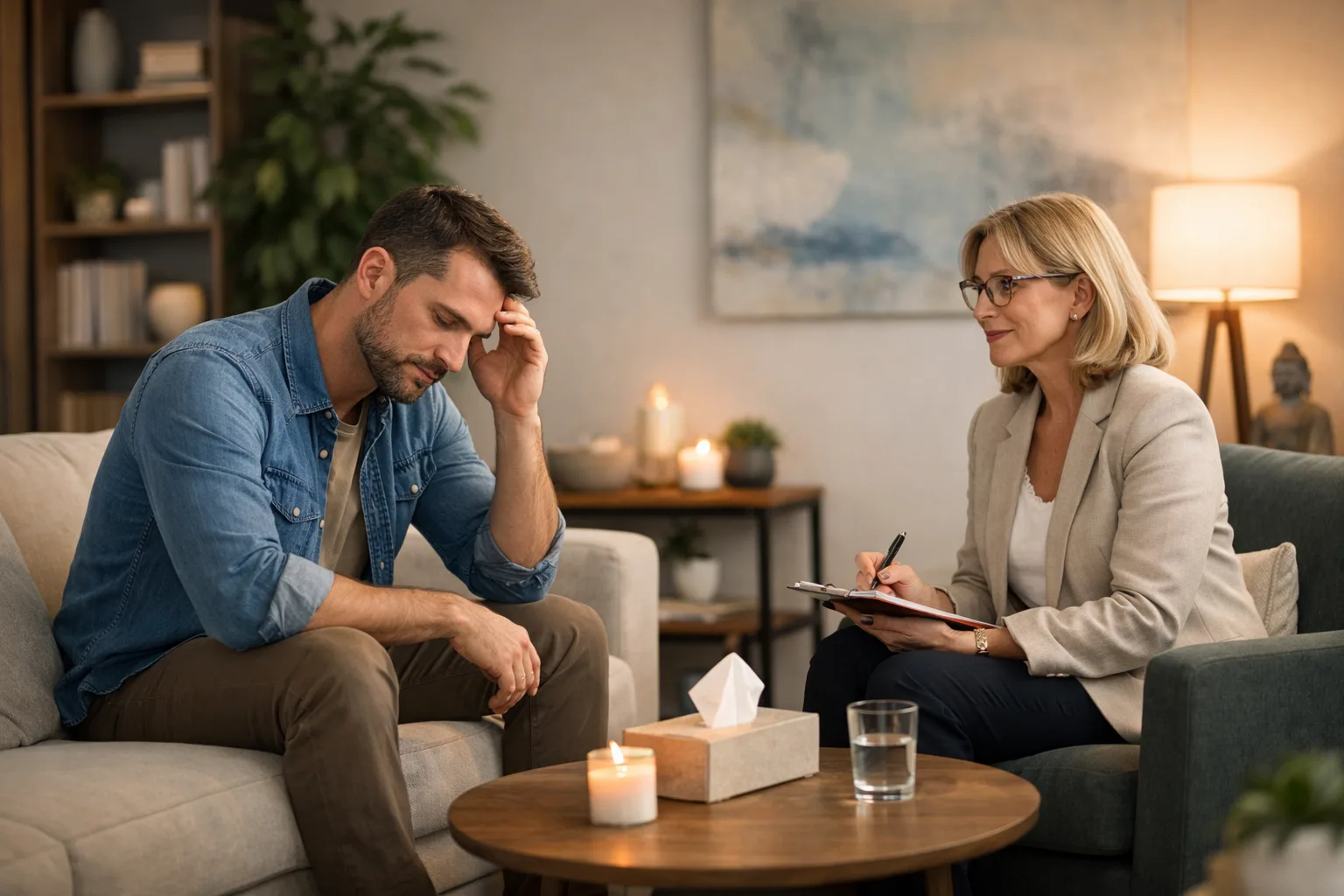
CBT for anxiety directly targets the thought patterns and avoidance behaviors that maintain anxiety disorders. Exposure-based components — gradual, supported approach to anxiety-provoking situations without substance use — build the tolerance for anxiety that substances have been substituting for. DBT skills provide a toolkit of distress tolerance and emotional regulation techniques that do not involve substances. Acceptance-based approaches help clients develop a different relationship with anxiety — reducing the sense that anxiety is intolerable and must be eliminated rather than experienced and tolerated.
*What medication considerations apply in this context?*
Benzodiazepines — while effective for anxiety — carry significant abuse and dependence risk and are typically avoided or used only briefly in addiction treatment contexts. SSRIs and SNRIs (antidepressants with anxiety-reducing effects) are the preferred pharmacological first-line for anxiety disorders in recovery. Buspirone is a non-habit-forming anxiety medication that is appropriate for ongoing use. Beta-blockers can manage physical anxiety symptoms situationally without dependence risk.
Questions, answered
Is it normal to feel more anxious after stopping alcohol?
Yes, and it can be severe. Anxiety is one of the primary symptoms of alcohol withdrawal and post-acute withdrawal syndrome (PAWS). In the context of physical dependence, stopping alcohol without medical supervision can produce not just anxiety but seizures. Medical detox is the appropriate first step for anyone with significant alcohol use. The anxiety produced by withdrawal is not a sign that sobriety makes anxiety worse permanently — it is a neurological withdrawal phenomenon that resolves with time and appropriate support.
Can someone with severe anxiety get through treatment without using substances to cope?
Yes — with appropriate clinical support. The experience of managing anxiety without substances is genuinely difficult in early recovery, and it is not the same thing as asking someone to simply not use. Structured, skills-based therapeutic support, appropriate medication when indicated, and a safe treatment environment all reduce the gap between the anxiety that exists and the person's capacity to tolerate it without substances.
How long does anxiety last after stopping substances?
Acute withdrawal anxiety typically resolves within days to weeks depending on the substance and level of dependence. Post-acute withdrawal symptoms including mood instability and anxiety can persist for months in some cases. Underlying anxiety disorder symptoms that predate substance use will not resolve with sobriety alone — they require their own treatment. The clinical picture typically clarifies significantly after four to eight weeks of sobriety. If anxiety and substance use are both part of your experience, our admissions team can speak with you confidentially about what integrated treatment looks like. Verify your insurance coverage before making any decisions.
Does Bliss Recovery offer treatment for this?
Bliss Recovery provides personalized, evidence-based care in a private Hollywood Hills setting, with a full continuum from medical detox through residential treatment and PHP/IOP. Our admissions team can help you find the right level of care.
How do I get started or verify my coverage?
You can verify your insurance confidentially with no obligation, or reach our admissions team directly. We will walk you through the next steps and help you understand your options.